- Gesamtes Studienangebot
- Bachelor
- Musik
- Fach (Grundschule)
Musik Fach (Grundschule)
Überblick
Abschluss:
Bachelor

Studiendauer:
6 Semester
Studienbeginn:
Wintersemester & Sommersemester

Zulassungsbeschränkungen:
Ohne NC
1
Jetzt bewerben!
Jetzt Studiengang zusammenstellen
Inhalte des Fachs Musik
Hinweis: Die weiteren Zugangsvoraussetzungen entfallen zum Wintersemester 2026/27.
Musik ist weit mehr als ein Unterrichtsfach. Sie begleitet uns in unserem Alltag, ob als Hörer*in im Konzert oder auf einem Festival, als Produzent*in von Songs und Beats auf dem eigenen Tablet oder als Musiker*in im Chor oder Musikverein.
Im Bachelorstudium des Schwerpunktfaches Musik lernen Studierende Musik in ihrer ganzen Vielfalt kennen. Sie erweitern und vertiefen ihre Fähigkeiten im Gesang und auf dem Instrument, musizieren gemeinsam in Ensembles und kommen mit aktuellen Forschungsfragen und -methoden in Berührung. Darüber hinaus bauen sie fundierte didaktische und pädagogische Kenntnisse auf, die sie in die Lage versetzen, Kindern und Jugendlichen die Vielfalt musikalischer Erscheinungsformen zu vermitteln. Einige Veranstaltungen sind interdisziplinär ausgerichtet und tragen dem fächerverbindenden Arbeiten in der Grundschule wie dem ästhetisch-künstlerischen Lernen im Kontext Kultureller Bildung Rechnung.
Auf das abgeschlossene Bachelorstudium folgt in der Regel ein Masterstudium in einem lehramtsbezogenen Studiengang mit Abschluss Master of Education oder einem künstlerisch-fachwissenschaftlichen Studiengang mit Abschluss Master of Arts (z. B. Masterstudium „Kulturvermittlung“). Im Master of Education werden die im Bachelor erarbeiteten Grundlagen musikalischen Lehrens und Lernens vertieft und im Rahmen des Praxissemesters erprobt und reflektiert.
Ansprechpersonen
Vorteile des Fachs Musik an der Uni Bielefeld
Vielfältige musikalische Ausbildung
Der Studiengang bietet eine umfassende Ausbildung in verschiedenen
musikalischen Disziplinen, einschließlich Gesang, Instrumentalspiel und
Musiktheorie. Studierende können ihre Fähigkeiten in Ensembles und bei
interdisziplinären Projekten vertiefen und erweitern, was zu einer
ganzheitlichen musikalischen Kompetenz führt.
Praxisorientierte Lehrmethoden
Durch praktische Erfahrungen im schulpraktischen Instrumentalspiel und das
Musizieren mit Gruppen wird ein hoher Praxisbezug gewährleistet. Studierende
lernen, wie sie verschiedene Themenfelder und Unterrichtsmethoden aktiv in
den Musikunterricht integrieren können.
Individuelle Betreuung
Der kleine, aktive Fachbereich ermöglicht eine enge Betreuung durch
Lehrende. Diese persönliche Unterstützung fördert eine intensive
Auseinandersetzung mit den Studieninhalten und trägt dazu bei, individuelle
Stärken der Studierenden gezielt zu fördern.
Interdisziplinäre Projekte
Die enge Zusammenarbeit mit dem Fach Kunst und Kultureinrichtungen der
Region eröffnet vielfältige Möglichkeiten für kreative Projekte. Studierende
können ihre musikalischen Horizonte erweitern und praktische Erfahrungen in
der Kunstpädagogik sammeln.
Hochwertige Berufsvorbereitung
Der Studiengang vermittelt nicht nur die fachlichen Kompetenzen, sondern
bereitet auch gezielt auf die Anforderungen des Lehrerberufs vor. Im
Anschluss an das Bachelorstudium führt der Master of Education zur
Lehrbefähigung, wodurch die Absolvent*innen optimal auf ihre berufliche
Laufbahn vorbereitet werden.
Berufsperspektiven
Insbesondere in den Bereichen Haupt-, Real-, Sekundar- und
Gesamtschule, Grundschule aber auch Integrierte Sonderpädagogik bestehen gute
Einstellungschancen. Auch bei den MINT-Fächern (mit Ausnahme von Biologie)
herrscht ein großer Bedarf an Lehrkräften. Dennoch gilt es zu bedenken: Man
unterrichtet die Inhalte für eine lange Zeit. Man sollte sich also für das,
was man unterrichtet, interessieren und studieren, wofür man Begeisterung
verspürt.
Auch eine Auseinandersetzung mit dem Alter der Schüler*innen in den
jeweiligen Schulformen ist hilfreich bei der Entscheidung.
Welche Zugangsvoraussetzungen gibt es?
Zum Bachelorstudium erhält Zugang, wer über eine geeignete Hochschulzugangsberechtigung (z. B. Abitur) verfügt.
Besonderheiten gelten für Bewerber*innen mit ausländischem Bildungsnachweis.
Ebenso gelten Besonderheiten für in der beruflichen Bildung Qualifizierte.
Welche Formalia sind noch wichtig?
Studienbeginn
Das Studium kann sowohl im Winter- als auch im Sommersemester aufgenommen werden. Das Lehrangebot ist auf einen Studienbeginn im Wintersemester ausgerichtet. Eine Studienberatung zur Planung des Studienverlaufs wird empfohlen.
Studiendauer und -umfang
Die Regelstudienzeit beträgt 6 Semester in Vollzeit. Informationen zum Studium in Teilzeit.
Das Studium Fach (Grundschule) Musik umfasst 40 Leistungspunkte.
Bitte informieren Sie sich über das Studienstrukturmodell und beachten Sie die Kombinationsmöglichkeiten.
Bewerbung, Zulassung und Einschreibung
Die Studienplätze für dieses Studienangebot unterliegen keinen Zulassungsbeschränkungen (Numerus clausus). Sie müssen sich dennoch innerhalb der aktuell geltenden Bewerbungsfristen bewerben. Im Anschluss daran können Sie jedoch direkt im Bewerbungs- und Statusportal den Antrag auf Einschreibung stellen, sofern die Zugangsvoraussetzungen vorliegen.
Schritt für Schritt zum Bachelorstudium ohne NC
Bitte beachten Sie, dass Bildungswissenschaften immer ein verpflichtender Bestandteil eines Studiums mit Lehramtsoption ist (siehe Studienstrukturmodell) und zwingend eine Bewerbung für einen Studienplatz erfordert.
Besonderheiten gelten für Bewerber*innen mit ausländischem Bildungsnachweis.
Ebenso gelten Besonderheiten für in der beruflichen Bildung Qualifizierte.
Die Lehrveranstaltungen
Hier finden Sie das Lehrangebot für diesen Studiengang im eKVV.
Eine Übersicht der Einführungs- und Orientierungsveranstaltungen stellt die zentrale Studienberatung zur Verfügung.
Kombinationsmöglichkeiten
 Kombinationsmöglichkeiten
Dieses Fach ist im Kombi-Bachelor mit folgenden Fächern kombinierbar:
Kombinationsmöglichkeiten Kombi-Bachelor für das Lehramt
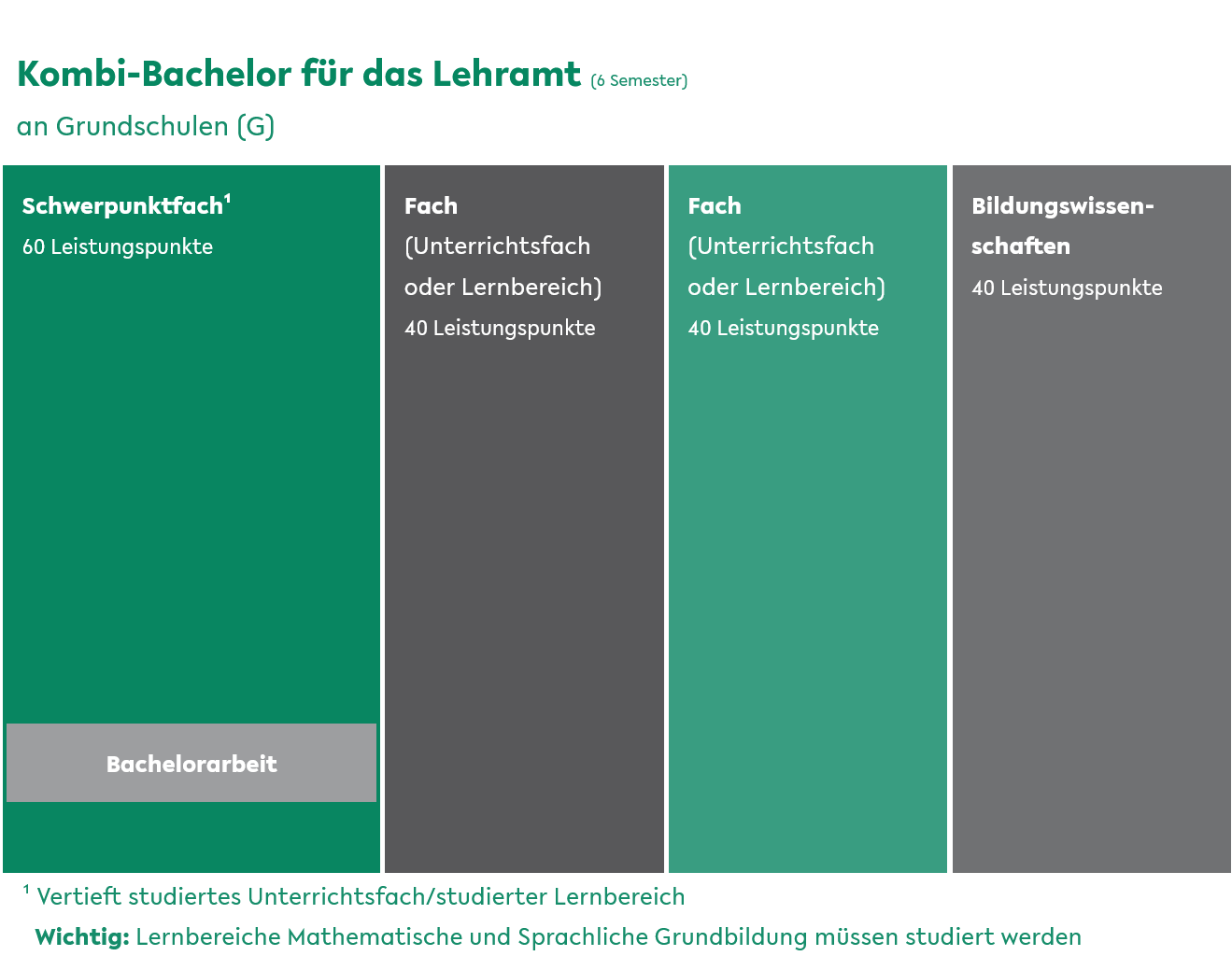
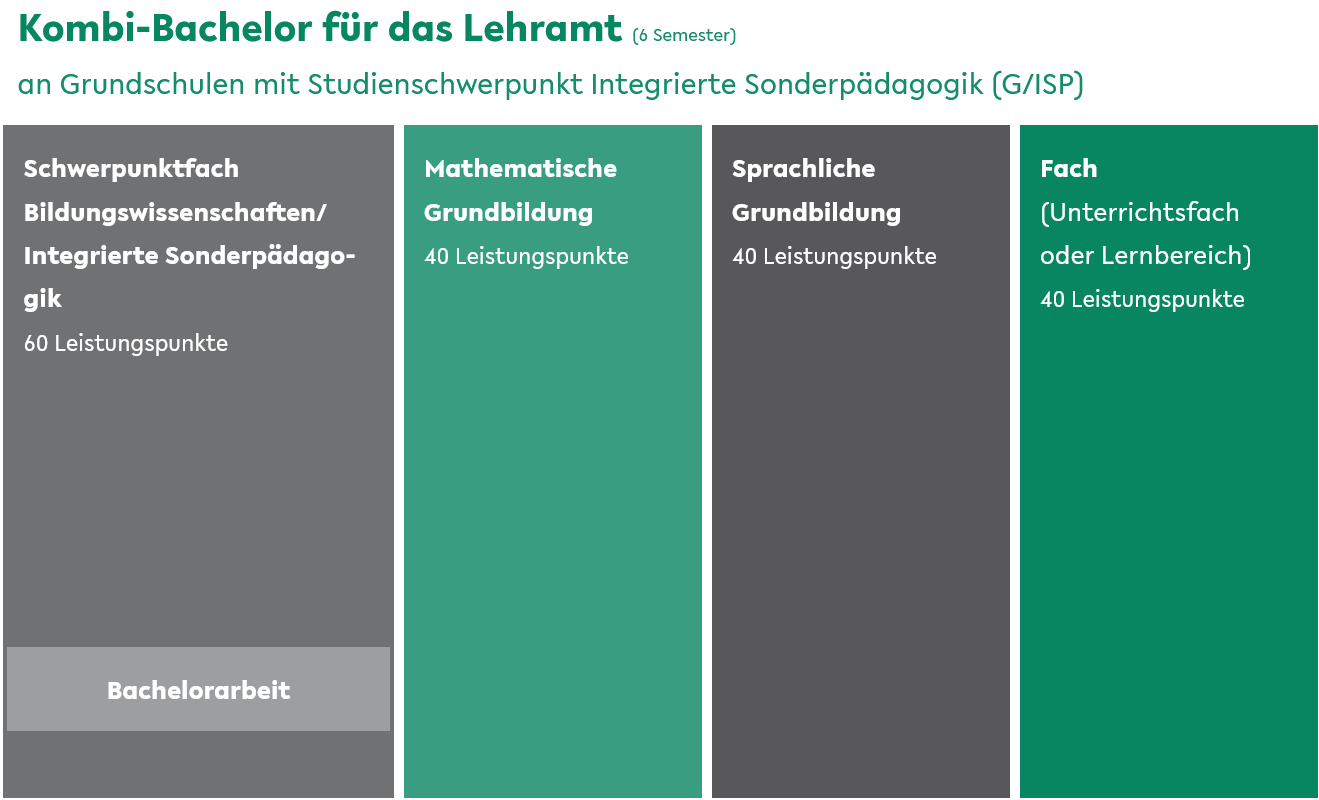
Legende
- 1
-
Die Angaben zu Zulassungsbeschränkungen / Numerus clausus (NC) beziehen sich auf die Bewerbung zum Wintersemester 2026/27 und Sommersemester 2027.
Informationen zu NC Werten aus früheren Jahren
Seitenleiste
Überblick
Abschluss:
Bachelor
Studiendauer:
6 Semester
Studienbeginn:
Wintersemester & Sommersemester
Zulassungsbeschränkungen:
Ohne NC
1
Jetzt bewerben!
Jetzt Studiengang zusammenstellen
Zum Seitenanfang